November 16, 2026
Gutter Cleaning Hackettstown: Essential for Roof and Siding Care
By @titusurcz556

Gutters do not get much credit when a home looks sharp, dry, and well-kept. Most people notice the roofline, the siding color, the windows, maybe the landscaping. They rarely look up and think about the metal channels quietly carrying water away from the house. Yet those channels often decide whether a roof ages gracefully or starts failing early, whether siding stays clean and intact or develops stains, rot, and moisture damage.
That is why Gutter Cleaning Hackettstown is not a cosmetic chore. It is a maintenance job tied directly to the life of your roof, the condition of your siding, and the health of the structure underneath both. In a place like Hackettstown, where the seasons bring leaf drop, spring rain, summer storms, and winter freeze-thaw cycles, neglected gutters create a chain reaction that can become expensive fast.
Homeowners usually call for gutter work after they see a symptom. Water spilling over the front edge during a storm. Dark streaks on siding. Mulch washed out of beds. Ice at the eaves in winter. A leak near the fascia or inside an upper wall. By the time these signs show up, the system has often been under strain for months, sometimes for years. Cleaning and inspection done at the right time can prevent nearly all of that.
The real job gutters perform
A gutter system has one basic purpose, but it performs that purpose in several critical ways. It captures rainwater as it comes off the roof, directs it toward downspouts, and moves it safely away from the house. That sounds simple until you consider how much water a roof sheds during an ordinary storm.
A moderate rain can send hundreds of gallons off a roof in a short window. If that water is not guided away, it falls where gravity takes it, often right next to the foundation, behind the gutter, or down the face of siding. Water is patient, and houses are full of weak points. Roof edges, soffits, fascia boards, window trim, siding joints, deck ledgers, and foundation seams all become vulnerable when runoff is uncontrolled.
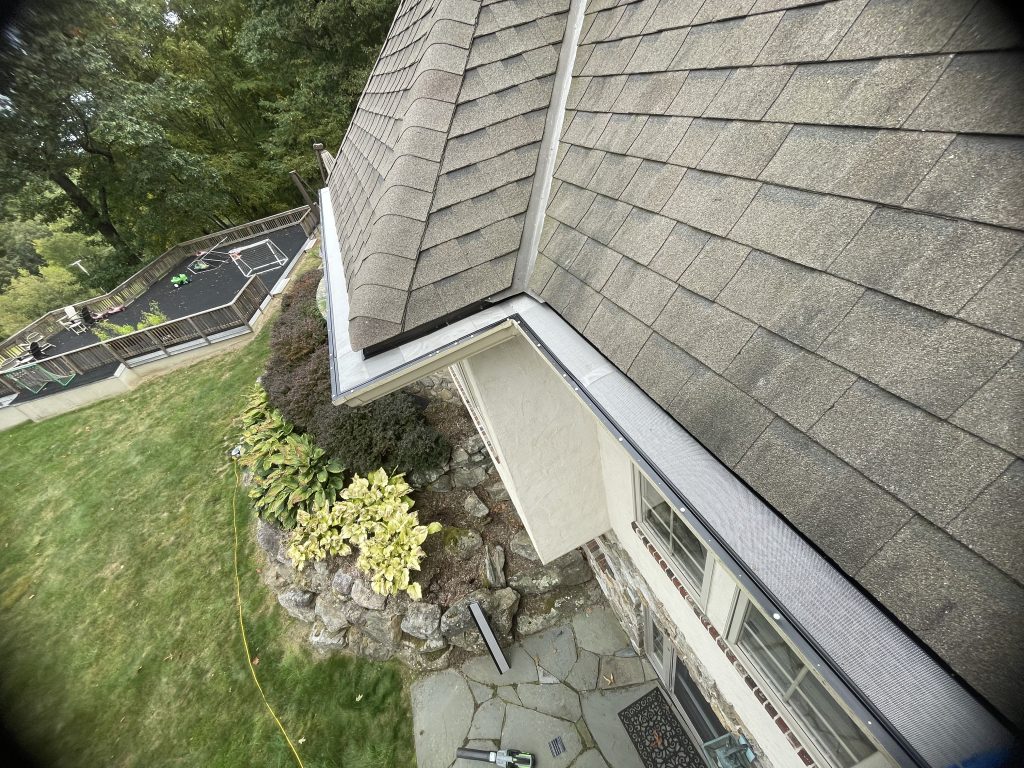
When gutters clog, the system does not partly work. It usually fails in a very specific pattern. Debris builds up in troughs and at downspout outlets. Water pools behind that debris. The extra weight strains hangers and pulls sections out of pitch. Once slope is lost, standing water remains even after the storm. In cold weather, that standing water freezes. In warm weather, it turns into sludge that traps more debris. That is how a maintenance issue turns into structural wear.
Why Hackettstown homes are especially vulnerable
Hackettstown has the kind of environment that keeps gutter companies busy. Mature trees are common in many neighborhoods. That means oak leaves, maple leaves, seed pods, twigs, and shingle grit all end up in the troughs. A single windy week in the fall can fill parts of a system that looked clear a month earlier.
Then there is the weather pattern. Heavy spring rains test capacity. Summer downpours expose any weak downspout flow or poor pitch. In late autumn, clogged gutters often sit full of wet leaves just before temperatures drop. Once winter arrives, frozen blockages can contribute to ice buildup along roof edges. Even a house with a relatively new roof can struggle if water cannot leave the gutter line properly.
I have seen homes where the owner assumed the siding had failed because of staining and algae. The real problem turned out to be chronic overflow from packed gutters on one side of the house, usually the shadier side where moisture lingered longer. I have also seen newer homes with excellent shingles and good flashing develop fascia rot simply because pine needles and granules had sealed off the downspout openings.
The lesson is straightforward. Local climate and tree cover matter just as much as the age of the home.
Roof damage often starts at the edge
People tend to think of roof problems as shingle problems. Missing tabs, worn granules, punctures, flashing issues, and storm damage get most of the attention. But some of the most persistent roof-related damage starts where the roof meets the gutter.
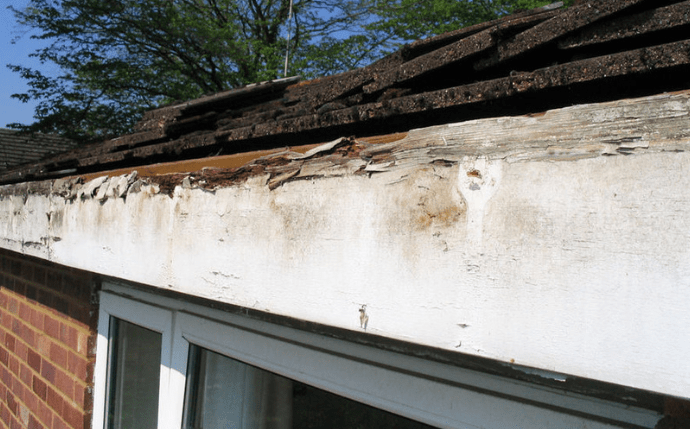
When gutters are clogged, water backs up rather than draining forward. That backup can saturate the fascia and the lower edge of the roof deck. On some homes, especially older ones, the first signs are subtle. Paint peels near the eaves. The fascia feels soft when pressed. Nails back out. In attics, you may notice dampness near the outer wall line after heavy rain.
Overflow can also push water under the first course of shingles if the lower edge remains submerged or if ice forms and traps meltwater. This is one reason roof edges sometimes fail sooner than the field of the roof. The shingles themselves may still have useful life left, but the wood beneath them does not.
There is also the weight issue. Wet debris is heavy. A gutter packed with decomposing leaves and holding water can become far heavier than most homeowners expect. That weight can bend gutter sections, loosen spikes or screws, and distort the line enough to trap more water. Once the trough starts sagging, runoff no longer reaches the outlet efficiently. The roof edge then remains exposed to standing water for longer periods.
A good cleaning is not just about removing leaves. It is also the moment when someone can catch early signs of roof-edge trouble, such as loose drip edge, open miters, failing sealant, rust at fasteners, or shingle deterioration near the eaves.
Siding suffers quietly, then all at once
Roof damage tends to get attention because leaks are dramatic. Siding damage is quieter. It usually shows up as a gradual decline in appearance and performance.
When gutters overflow, water runs down wall surfaces repeatedly. Vinyl siding may not rot, but the sheathing and trim behind it can still absorb moisture if water gets where it should not. Fiber cement is durable, but it can still stain and wick moisture at joints if conditions persist. Wood siding is the most vulnerable, especially around butt joints, lower courses, and trim intersections.
Overflow creates several common siding problems. Dirt and organic matter leave vertical tiger-striping. Algae and mildew take hold on shaded elevations. Paint breaks down faster around corners and under eaves. Caulk joints age prematurely. In some cases, water reaching behind siding can contribute to hidden rot around windows and doors.
One house can make this very clear. On a two-story colonial, the front elevation may look fine while the side under a large maple shows staining from top to bottom. That difference is often not product failure. It is drainage failure. Cleaning the gutters, correcting pitch, and making sure downspouts discharge properly can stop the damage pattern before replacement becomes necessary.
The signs homeowners in Hackettstown should not ignore
Many gutter problems advertise themselves if you know what to watch for. These warning signs are worth taking seriously because they tend to point to active overflow or restricted drainage:
- water spilling over the front edge during rain
- plants or small weeds growing in the gutter trough
- dark stripes or green staining on siding below the roofline
- sagging sections, separated joints, or downspouts that drip at seams
- soil erosion, mulch displacement, or puddling near the foundation
You do not need all five signs for there to be a problem. Often one symptom is enough. Overflow at a single corner can indicate a full downspout, a slope issue, or a clog several feet away.
It is also worth checking after a storm https://damienbqez349.brightsora.com/posts/benefits-of-hiring-local-experts-for-gutter-cleaning-in-hackettstown rather than weeks later. Fresh evidence is easier to interpret. If you see water shooting over one section while another side drains normally, that tells you more than a dry inspection ever will.
Timing matters more than many people think
A lot of homeowners ask the same question: how often should gutters be cleaned? The honest answer is that frequency depends on the property. Tree cover, roof design, gutter size, nearby pines, prevailing wind, and even how damp the area stays after rain all affect buildup.
That said, many homes in Hackettstown benefit from cleaning at least twice a year, usually once in late spring and once after the bulk of fall leaf drop. Heavily wooded properties may need more attention, especially if pine needles, helicopter seeds, or oak leaves collect quickly. Some homes can go longer, but they are the exception rather than the rule.
The tricky part is that the need for service is not evenly distributed. A house may have one rear valley and one shaded side that clog far more often than the sunny front. A blanket schedule can miss those trouble spots if nobody is paying attention. That is why inspection matters as much as cleaning itself.
Late fall is the period when many homeowners feel the most pressure to act, and for good reason. Gutters entering winter with wet debris are far more likely to create ice-related issues. Still, spring should not be overlooked. Winter can loosen brackets, open seams, and leave behind compacted material that the first major rain will struggle to move.
What proper cleaning actually includes
There is a difference between quick debris removal and professional maintenance. A rushed job may make the gutters look better from the ground, but still leave downspouts partially blocked or fail to catch developing defects.
A solid service visit generally includes the following:
- removing leaves, sludge, granules, and roof debris from the gutter troughs
- flushing the system to verify that downspouts carry water freely
- checking pitch, hanger security, seams, corners, and outlet areas
- noting roof-edge, fascia, or soffit issues visible during the work
- clearing debris from discharge areas so water can move away from the home
That process sounds basic, but details matter. For example, a downspout can appear open from the top while still being partially obstructed near the elbow. A gutter can be technically clean but still hold water because one hanger has loosened and changed the slope. A joint can stay dry in light rain and leak only when a heavy storm fills the trough to capacity.
Experienced crews look for patterns, not just debris. Is one valley depositing an unusual amount of shingle grit? Is one section always packed tighter than the rest? Are splash blocks missing so discharge is coming back toward the foundation? These observations often save homeowners from more costly repairs later.
The gutter guard question
Homeowners often ask whether guards eliminate the need for cleaning. They do not, at least not completely. Some guard systems reduce the volume of large debris entering the trough, and on certain houses they can be helpful. But no product changes the fact that roofs shed granules, fine particles, seed fluff, and organic residue. Guards themselves can also collect debris on top or around the edges, especially under tree cover.
I have seen guards work reasonably well on homes with light leaf exposure and simple rooflines. I have also seen guarded systems clog at the downspout outlet because small debris washed through and compacted over time where no one could easily see it. On pine-heavy lots, needles can create mats that bridge across surfaces and slow intake.
The practical view is this: guards may reduce cleaning frequency on some properties, but they are not a license to stop inspecting the system. If someone sells them as a permanent, maintenance-free answer, that claim deserves skepticism.
Safety is part of the job
It is tempting for homeowners to treat gutter cleaning as a quick ladder task. Sometimes it goes fine. Sometimes it does not. Multi-story work, uneven ground, slick roof edges, power lines, and awkward access points all raise the risk level. Even single-story homes can be hazardous when wet leaves create slippery conditions or when ladders are set near landscaping, stone beds, or soft soil.
Beyond personal safety, there is the issue of causing accidental damage. Leaning a ladder the wrong way can dent gutters or crack covers. Walking a roof to blow debris down into the system can scuff shingles and dislodge granules, especially on older roofs or in hot weather. Poking aggressively into downspouts with improvised tools can separate joints.
Professional service is not only about saving time. It is also about using safe access, proper flushing, and enough experience to distinguish a simple clog from a developing hardware or drainage problem.
Small gutter problems that become big home repairs
One of the most frustrating parts of exterior maintenance is how cheap prevention usually is compared with repair. A cleaning visit is modest next to replacing fascia boards, repairing roof decking, repainting damaged trim, regrading washed-out beds, or addressing moisture in a wall cavity.
Consider a common progression. Leaves clog the upper gutter at a roof valley. Overflow wets the fascia and splashes against the siding below. Over repeated storms, paint begins to fail. The gutter starts to sag under weight. Water now bypasses the downspout completely in heavy rain. Winter comes, the trapped water freezes, and a seam opens. By spring, what began as debris removal has turned into carpentry, gutter repair, repainting, and possibly roof-edge work.
None of that is unusual. It is the standard life cycle of neglected drainage.
That is why regular Gutter Cleaning Hackettstown service should be viewed as part of roof and siding care, not as a separate chore. The systems are connected. Water does not care which contractor handles which trade. It simply follows the path available to it.
What to expect after a thorough service
When gutters are cleaned and functioning correctly, the difference often shows up in small, reassuring ways. During the next storm, water enters the trough smoothly and exits at the downspouts without spilling at corners. Siding stays cleaner over time. The beds around the house hold their shape instead of washing out. Problem areas near entrances or patios dry faster because runoff is no longer overshooting the system.
You may also notice issues that cleaning reveals rather than solves. A leaking corner joint, a downspout that drains too close to the foundation, a section with poor pitch, or a fascia board that has already softened from past saturation. That is not bad news. It is useful information caught before the damage spreads.
A good maintenance mindset treats cleaning as inspection plus prevention. Remove the debris, test the flow, correct minor issues, and plan repairs where needed. That approach protects not only the gutters but also the roofline, siding, trim, and foundation.
Choosing service with judgment, not just speed
Not every house needs the same approach, and that is where judgment matters. A ranch with minimal tree cover may need straightforward seasonal cleaning. A steep-roofed colonial with mature oaks, multiple valleys, and second-story access needs more care. A historic home with older wood fascia and custom trim benefits from especially attentive inspection because hidden water exposure can be more costly there.
When evaluating service, look for practical signs of thoroughness. Are downspouts flushed, not just assumed clear? Are problem areas photographed or explained? Is debris removed from the property rather than dropped into beds? Does the provider mention pitch, seams, fascia condition, and drainage extensions? Those details separate real maintenance from a superficial pass.
The cheapest visit is not always the least expensive choice if it misses a blocked downspout or overlooks a sagging section that fails in the next storm.
Why this upkeep pays off year after year
Home maintenance tends to reward consistency more than heroics. Cleaning gutters on a sensible schedule will not impress guests or change curb appeal overnight, but it does preserve the parts of the house that cost real money to replace. Roof edges stay drier. Siding lasts longer. Trim holds paint better. Soil remains in place. Water stays farther from the foundation. Those are tangible returns.
For Hackettstown homeowners, the local mix of seasonal debris and changing weather makes this especially important. Trees and storms do not take years off, and gutters do not clean themselves. A well-maintained system keeps roof runoff where it belongs and protects the materials below it from repeated soaking.
If your gutters overflow in rain, show visible growth, sag at the corners, or have not been inspected in a while, the safest assumption is that the system needs attention. Waiting rarely improves the outcome. Regular Gutter Cleaning Hackettstown service is one of the simplest ways to protect roof and siding performance, and one of the easiest ways to avoid repairs that never should have been necessary.
Just Gutters LLC
Address: 262 Main St, Hackettstown, NJ 07840
Phone number: +12013319454
FAQ About Gutter Cleaning Hackettstown
How much should a gutter clean cost?
Professional gutter cleaning typically costs between $163 and $333, with a national average of around $210 to $250 for a standard-sized home.
What months should you clean gutters?
You should clean your gutters twice a year—once in late autumn (November to December) and once in late spring (April to May).
Is it worth paying for gutter cleaning?
Yes, paying for gutter cleaning is worth it because it prevents thousands of dollars in water damage, roof leaks, and structural repairs.
❧